Gaëlle Choisne (1975) lives and works between Paris and Fougères (Brittany, France) and around the world.
Sensitive to the issues surrounding images, which she explores through sculpture and architecture, Gaëlle Choisne develops a practice that examines the complexity of the world and its political and cultural disorder. Her work addresses, in particular, the overexploitation of nature and its resources, as well as the vestiges of colonial history, bringing together Creole esoteric traditions, myths and popular cultures.
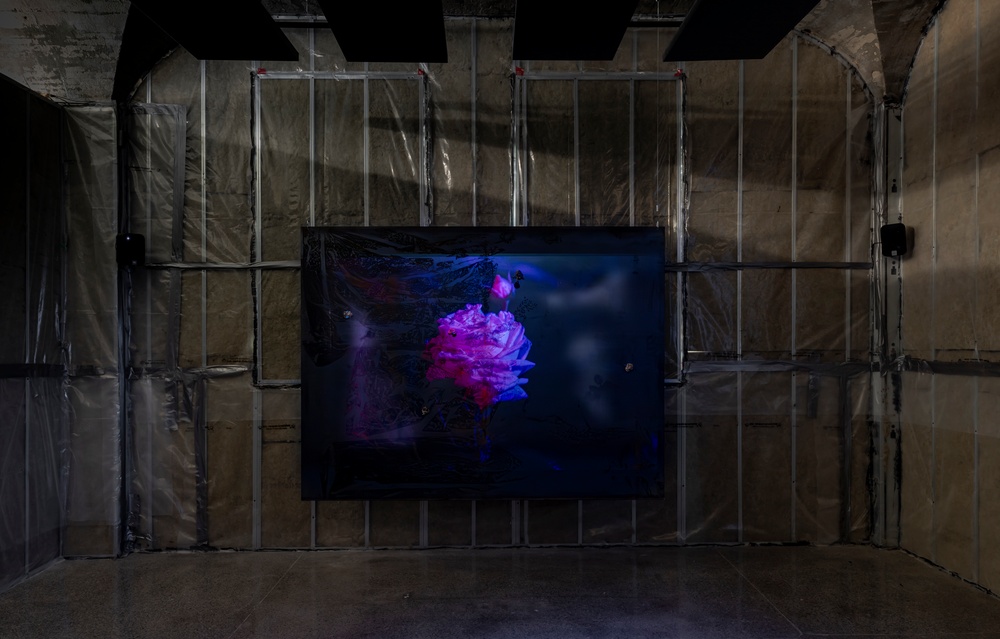
Her projects are conceived as ecosystems of sharing and collaboration, as pockets of “resistance” in which new possibilities emerge, notably through her project Temple of Love. Initiated in response to Roland Barthes’s seminal essay A Lover’s Discourse: Fragments (1977), Gaëlle Choisne introduces a political dimension to the concept of love, paying tribute to invisible bodies, marginalised and vulnerable souls, and dispossessed hearts. Temple of Love is an evolving project shaped by its various manifestations and origins, according to the invitations she receives and the contexts in which it unfolds. It brings together sculpture, performance, design and video.
Gaëlle Choisne’s works and installations have been exhibited in numerous institutions, including Piccola Scuola Zattere (Venice), Reiffers Art Initiatives (Paris), MAC VAL (Vitry-sur-Seine), Konschthal – Esch-sur-Alzette (Luxembourg), Centrale Powerhouse (Montreal), CAFA Museum (Beijing), Pera Museum (Istanbul), MAM – Musée d’Art Moderne de Paris, Musée Fabre (Montpellier), Zachęta National Gallery of Art (Warsaw), The Mistake Room (Los Angeles), Bétonsalon (Paris), G—und project space (Berlin), MAMO – Centre d’art de la Cité Radieuse (Marseille), Centre d’art contemporain La Halle des bouchers (Vienne), Musée archéologique Henri-Prades (Lattes), and Musée des Beaux-Arts de Lyon, among others.
She has also participated in numerous biennials and triennials, including the 14th Taipei Biennial (2025), the 15th Gwangju Biennale (2024), the 3rd Toronto Biennial of Art (2024), the 5th New Museum Triennial in New York (2021), the 11th Göteborg International Biennial for Contemporary Art (GIBCA, 2021), the 13th Sharjah Biennial (2017), the 14th Curitiba International Biennial (2017), the 13th Lyon Biennale (2015), and the 12th Havana Biennial (2015).
She has taken part in numerous residency programmes in France and internationally, including at the Manufacture de Sèvres, Bethanien–KW (Berlin), the Rijksakademie (Amsterdam), the Meeting Points Collaboration with CCA – Campus Caraïbéen des Arts (Martinique), Atelier Van Lieshout (Rotterdam), the Cité Internationale des Arts in Paris with Art Explora, and OPTICA & Art3 Valence (Montreal).
In 2024, she was awarded the Prix Marcel Duchamp, and in 2021, the AWARE Prize. In 2019, she was nominated for the Prix de la Fondation Ricard.
Gaëlle Choisne is represented by Kaufmann Repetto (Milan and New York), 193 Gallery (Paris and Venice), and Nicoletti (London).
Edouard Glissant writes “The first darkness came from being torn away from the everyday country, from the patron gods, from the tutelary community”, and in this sense, Gaëlle Choisne’s thaumaturgic touch serves to re-establish an order, to heal a wound, to reconstitute the broken balance between us and the planet. Born in Northern France, to a Haitian mother and a Breton father, her autobiography bears the indelible marks of colonialism that remain in certain aspects of her artistic production and that see Haiti as a microcosm generating energetic reflections in the rest of the world.
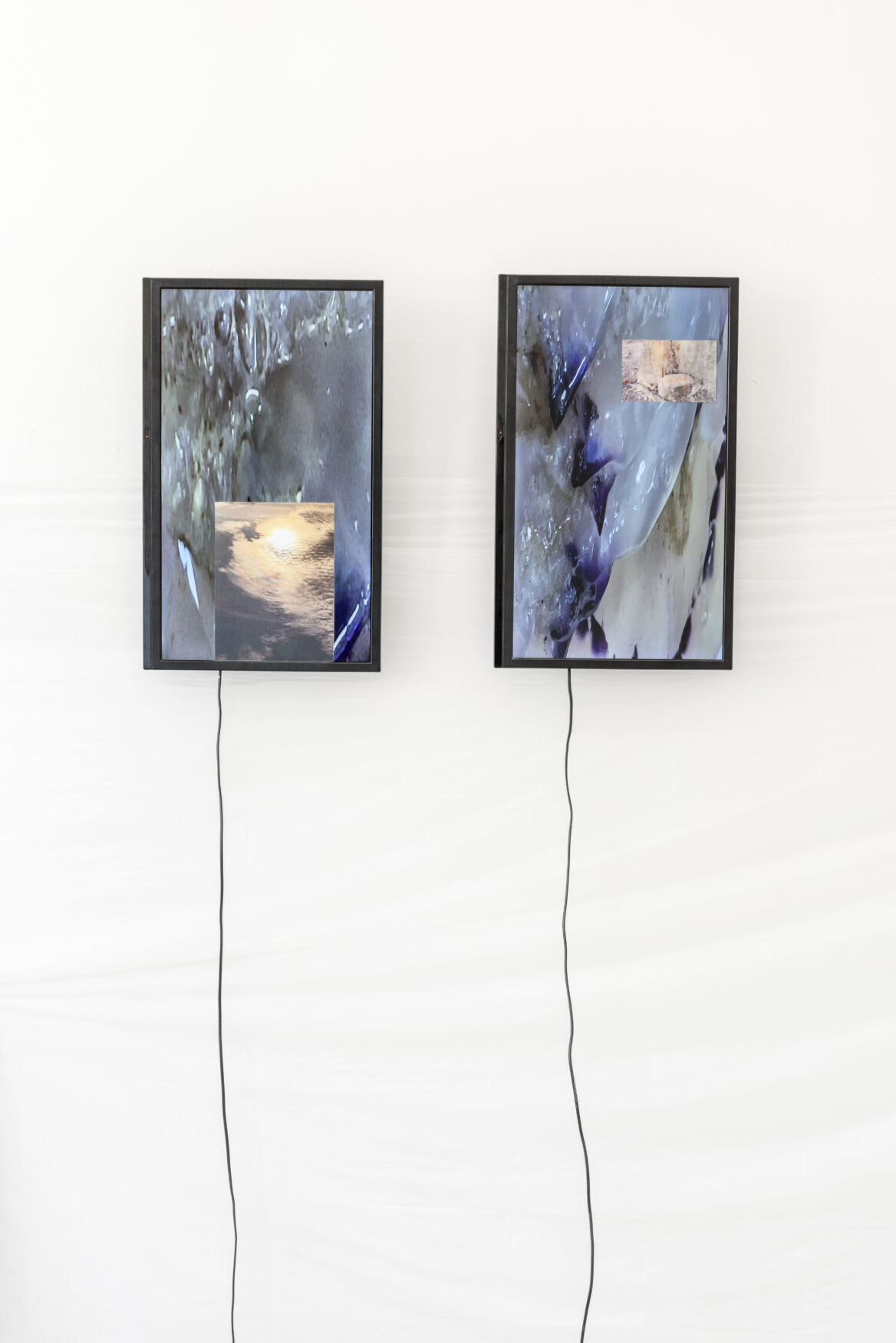
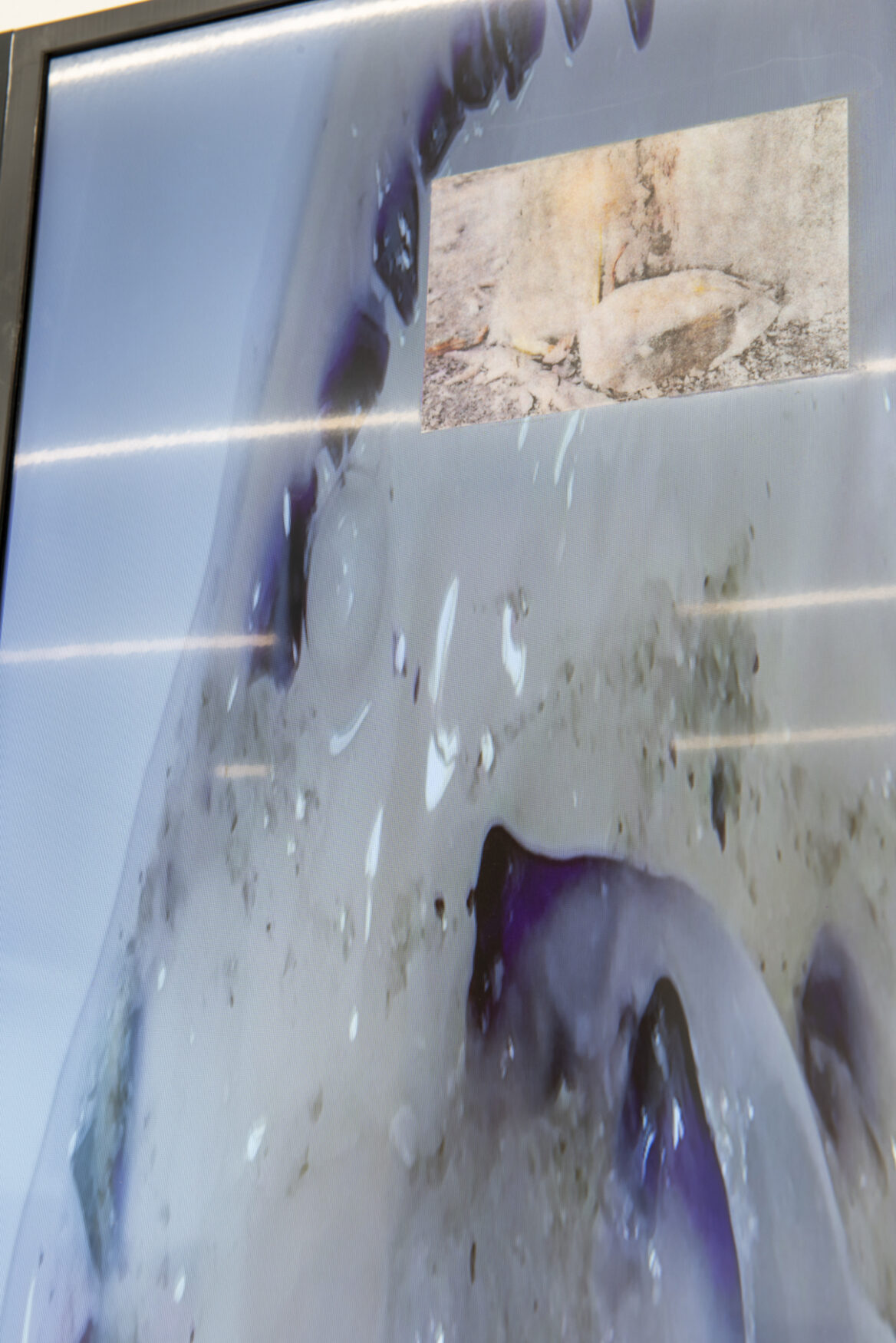
Her modus operandi starts from a physical and spiritual relationship with materials and the use of various media: from sculpture, to videos made from found footage, to installations that build an abacus of linguistic hybridities in the complexity of a culture that combines vernacular elements with those of globalisation.
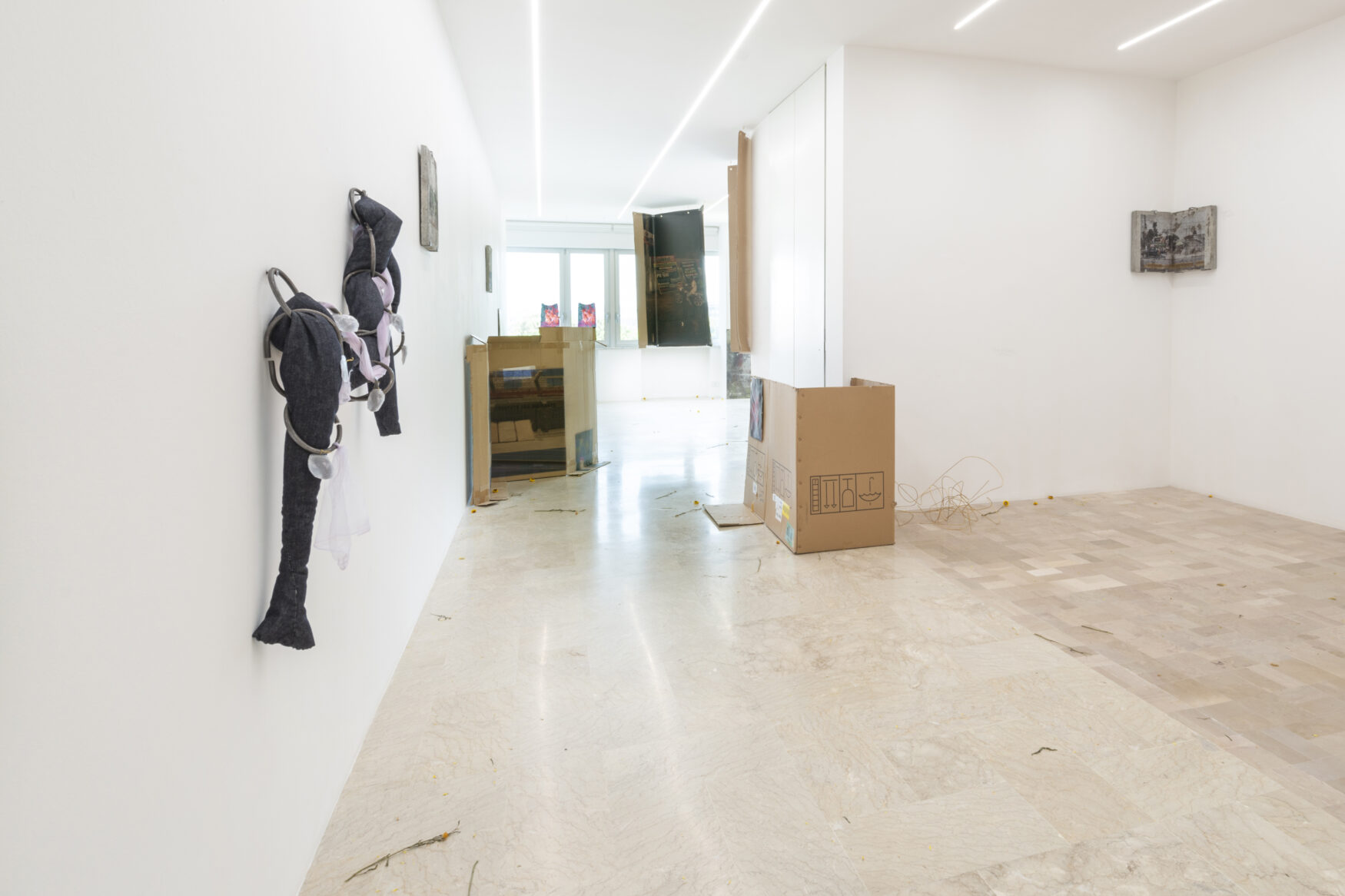
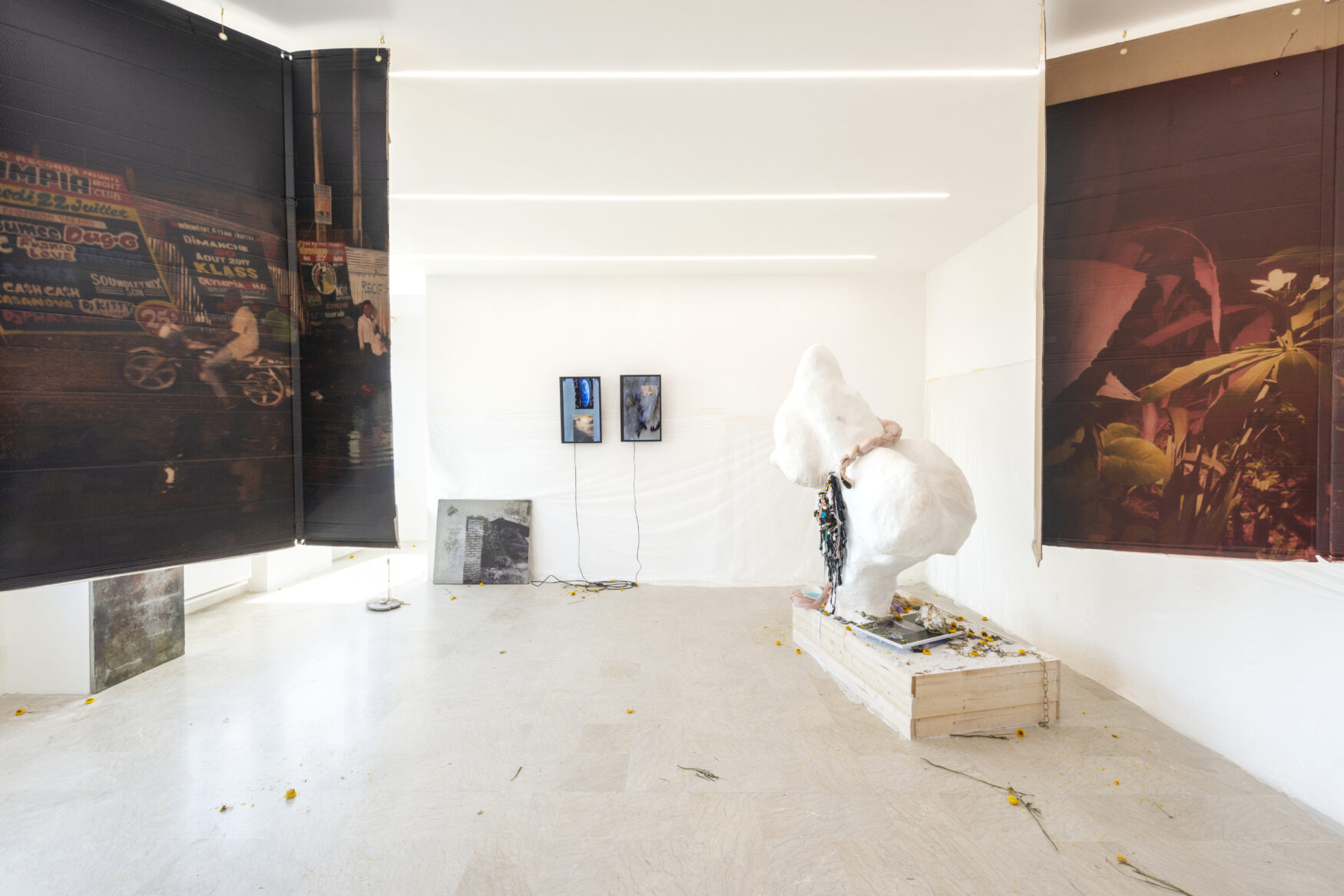
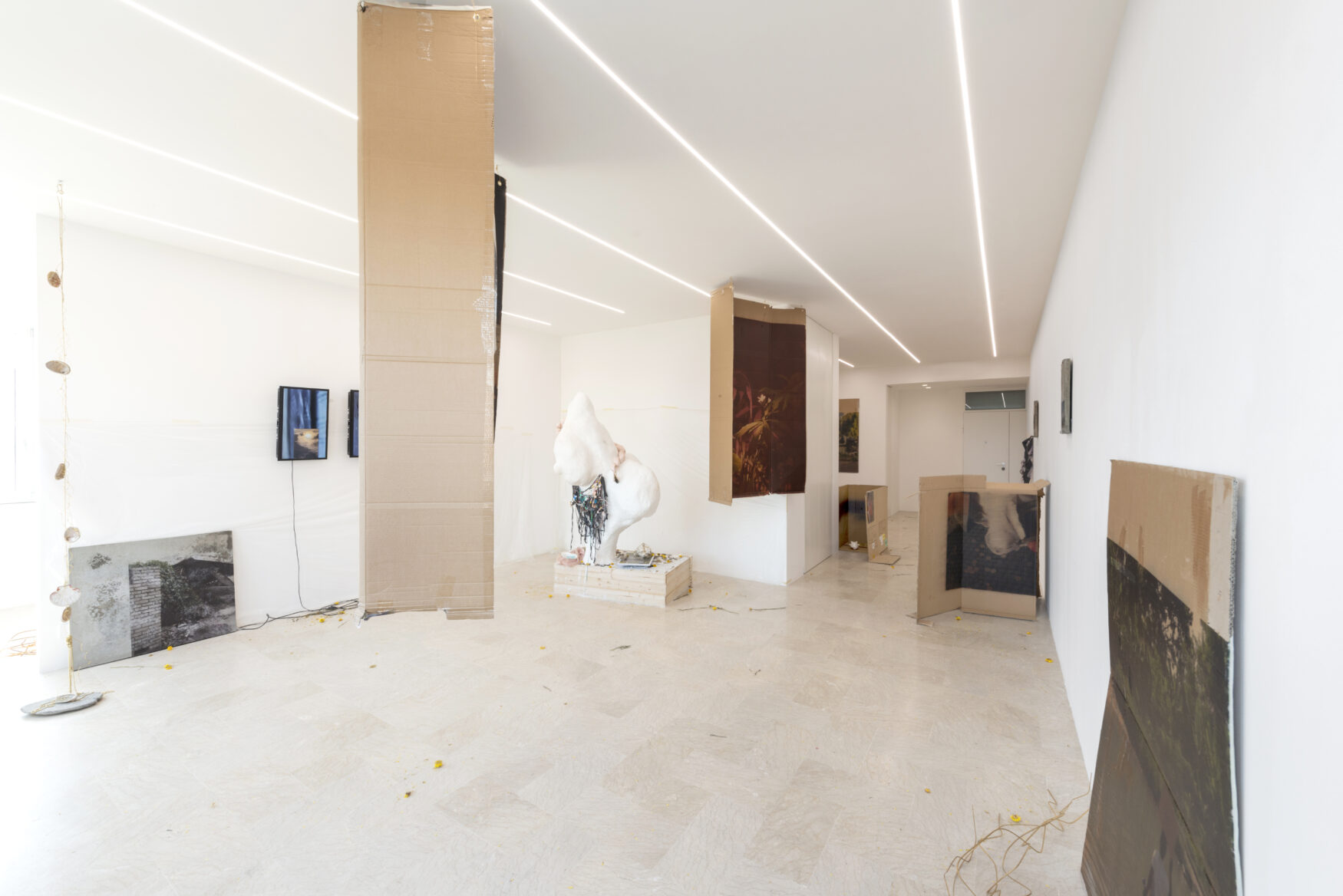
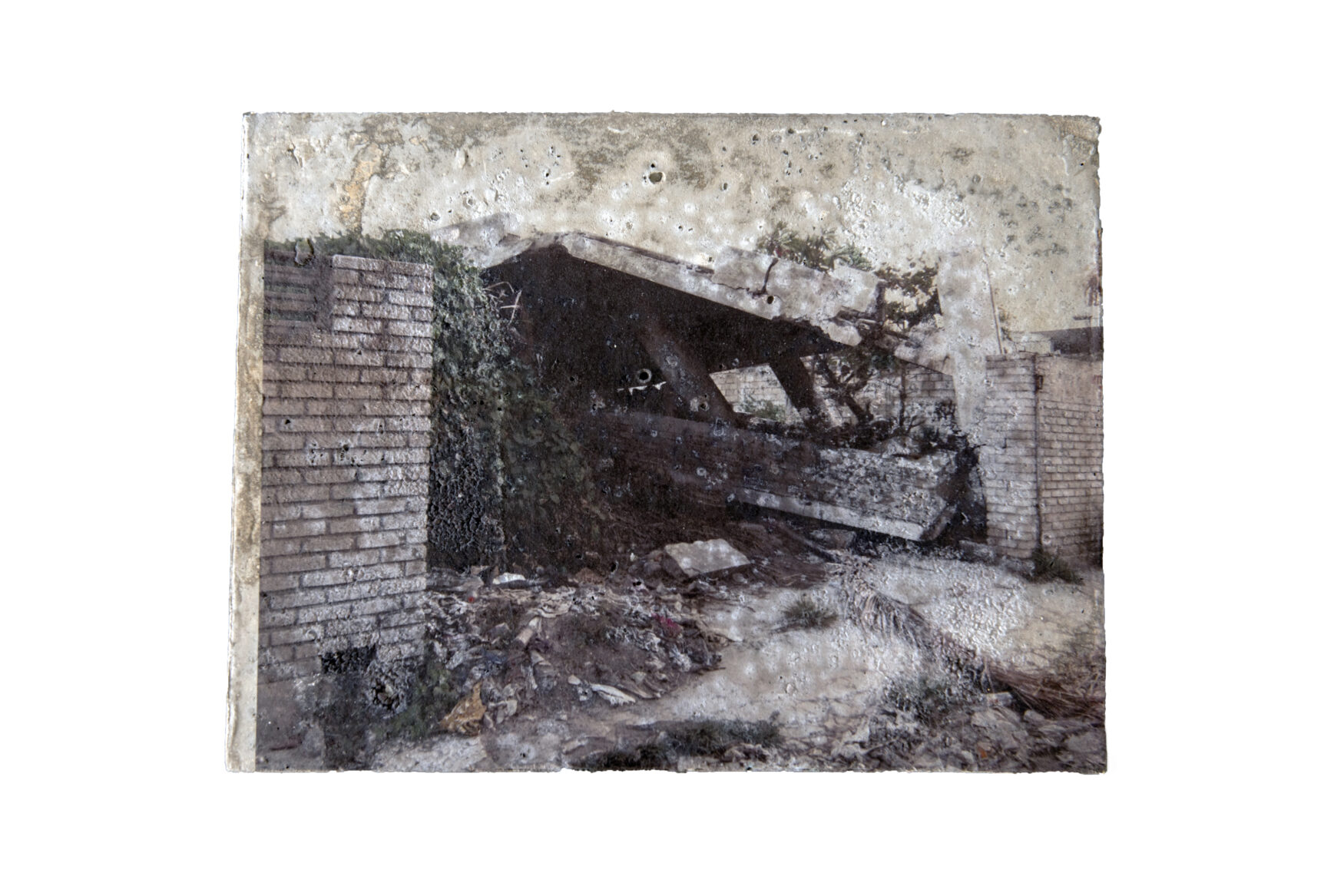
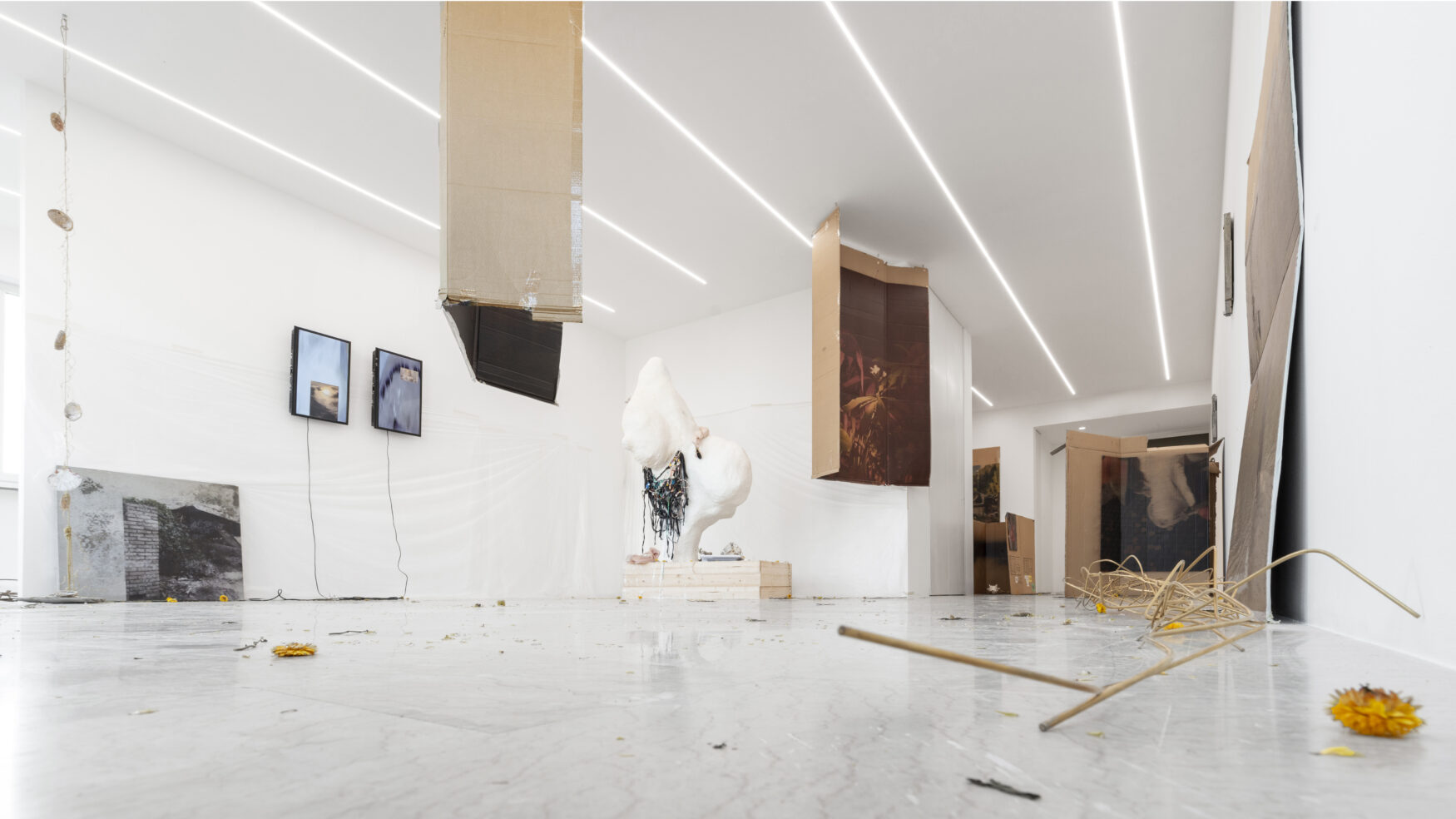
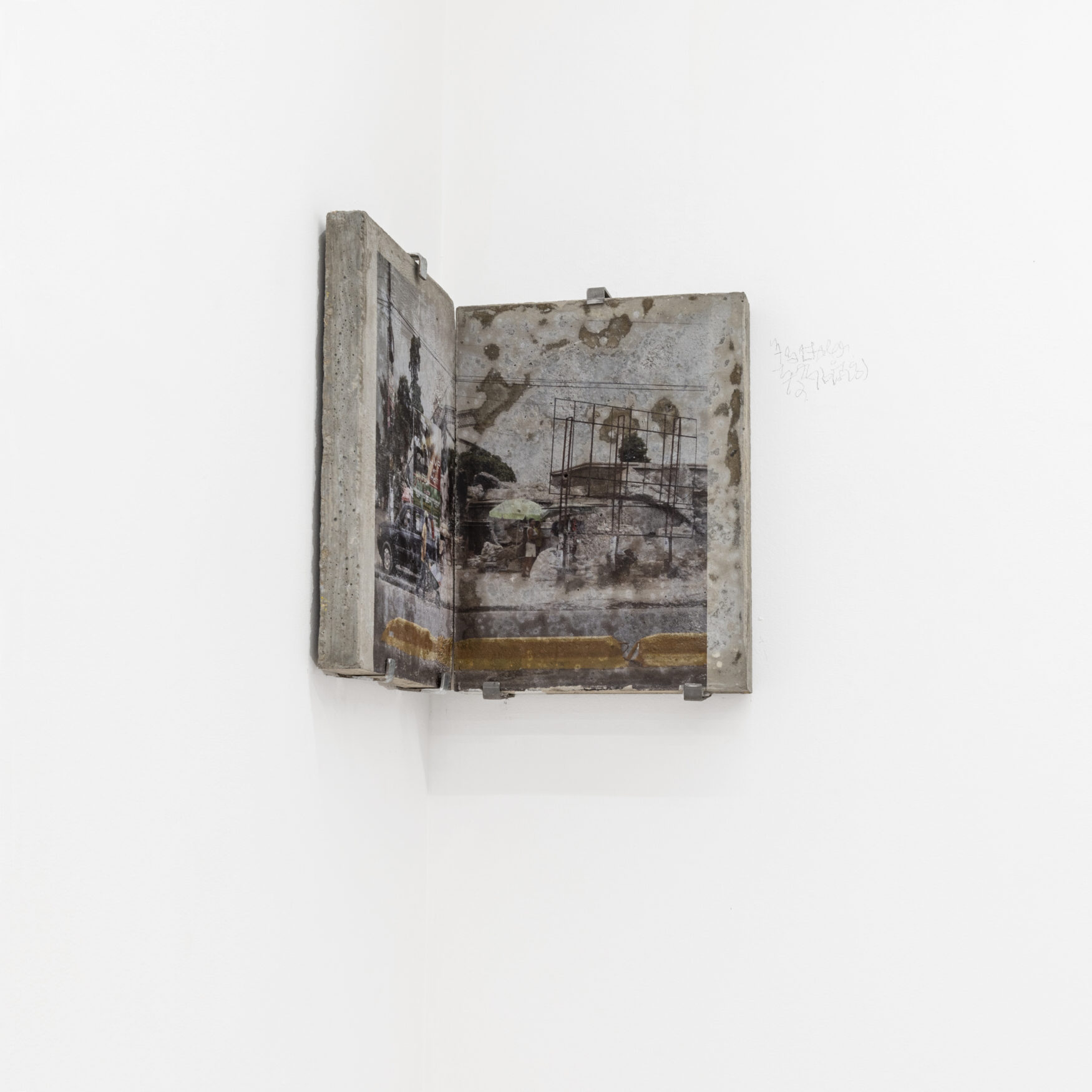
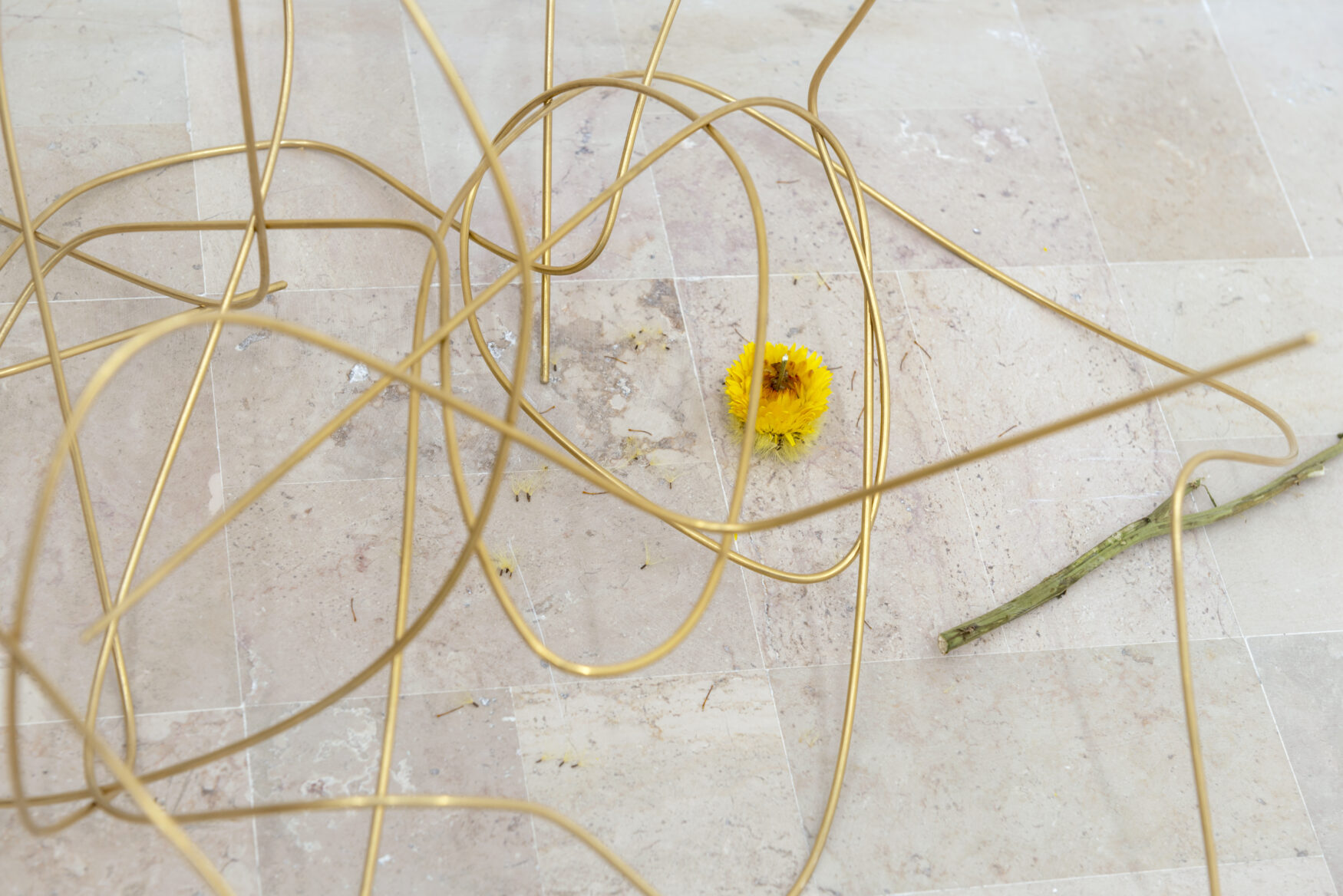
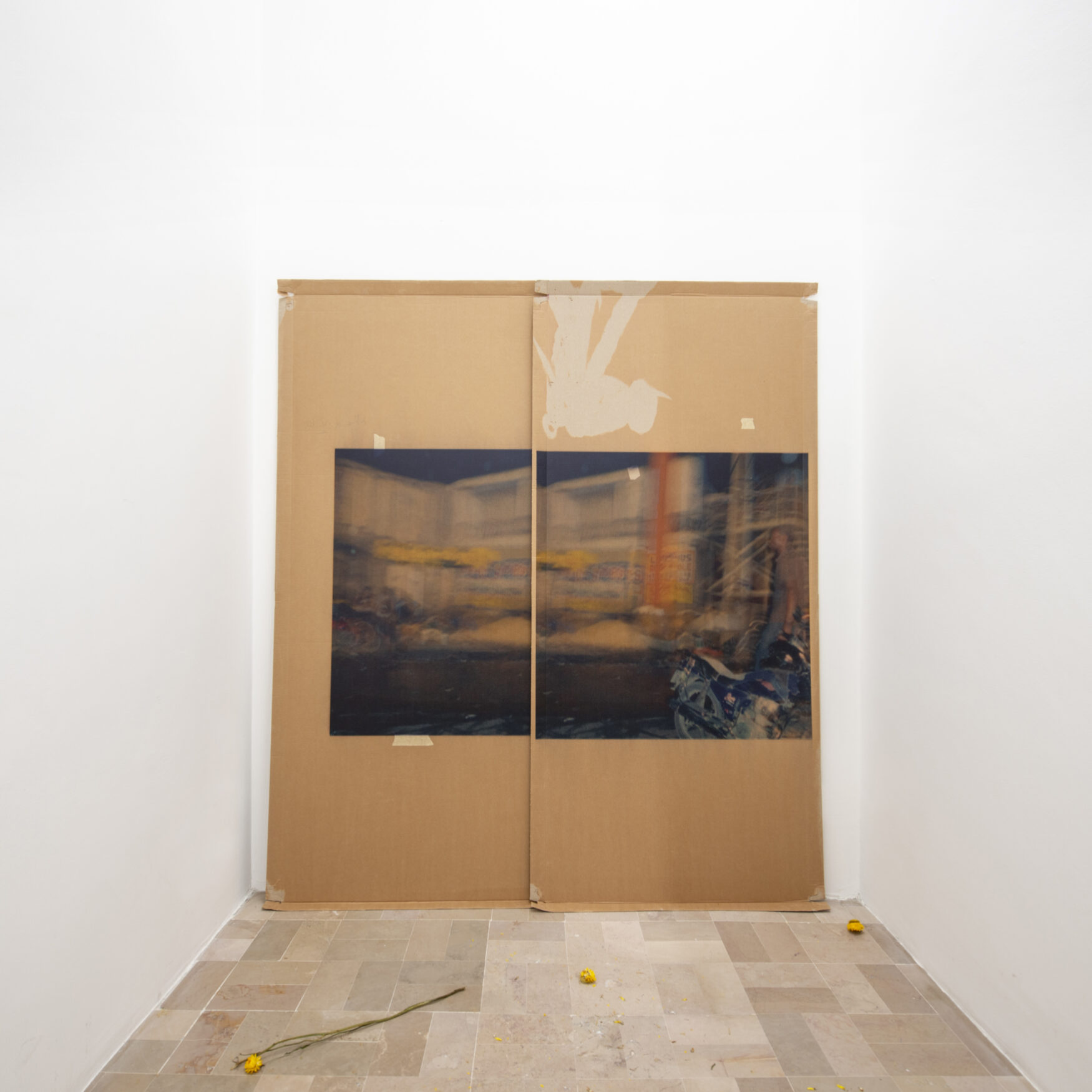
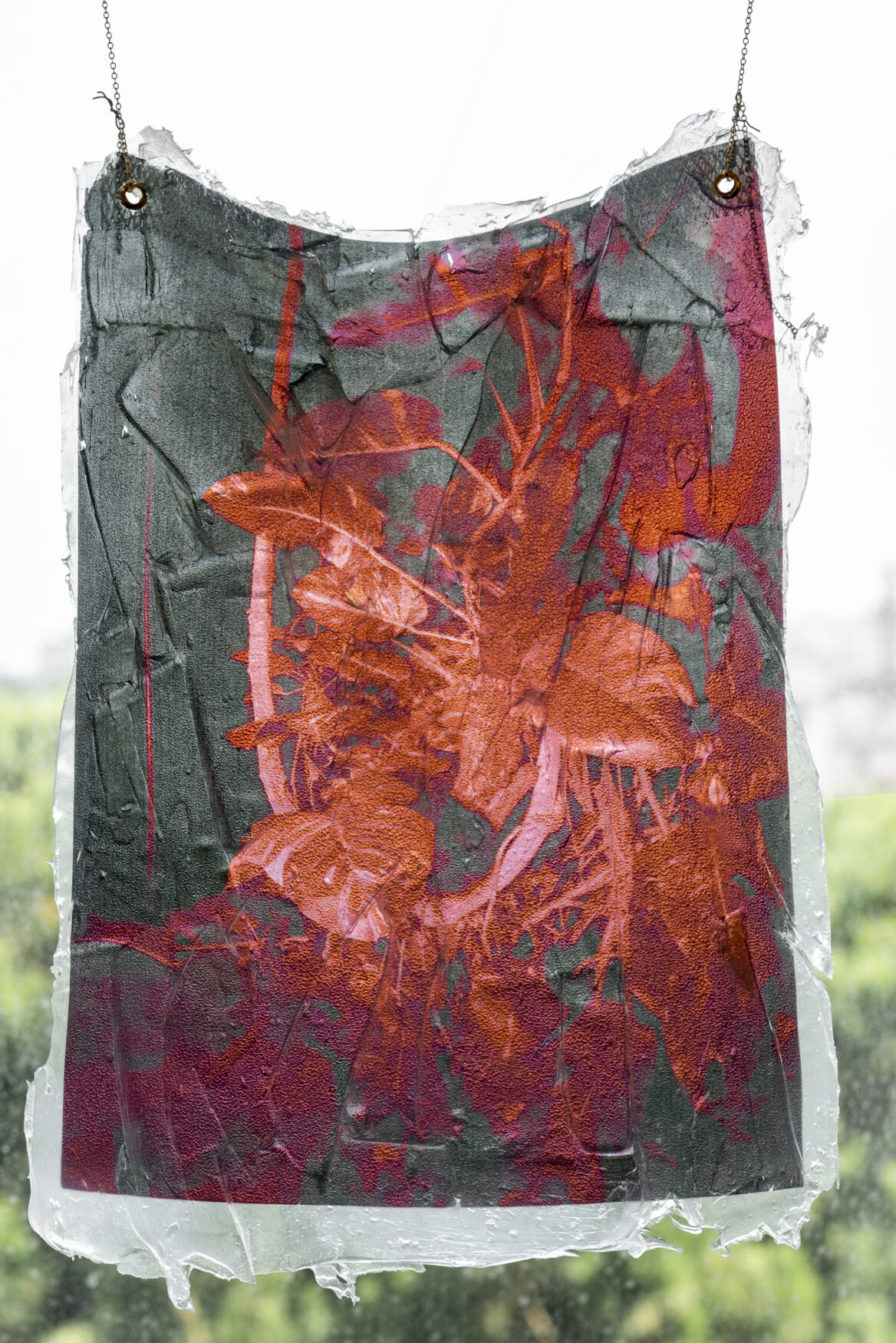
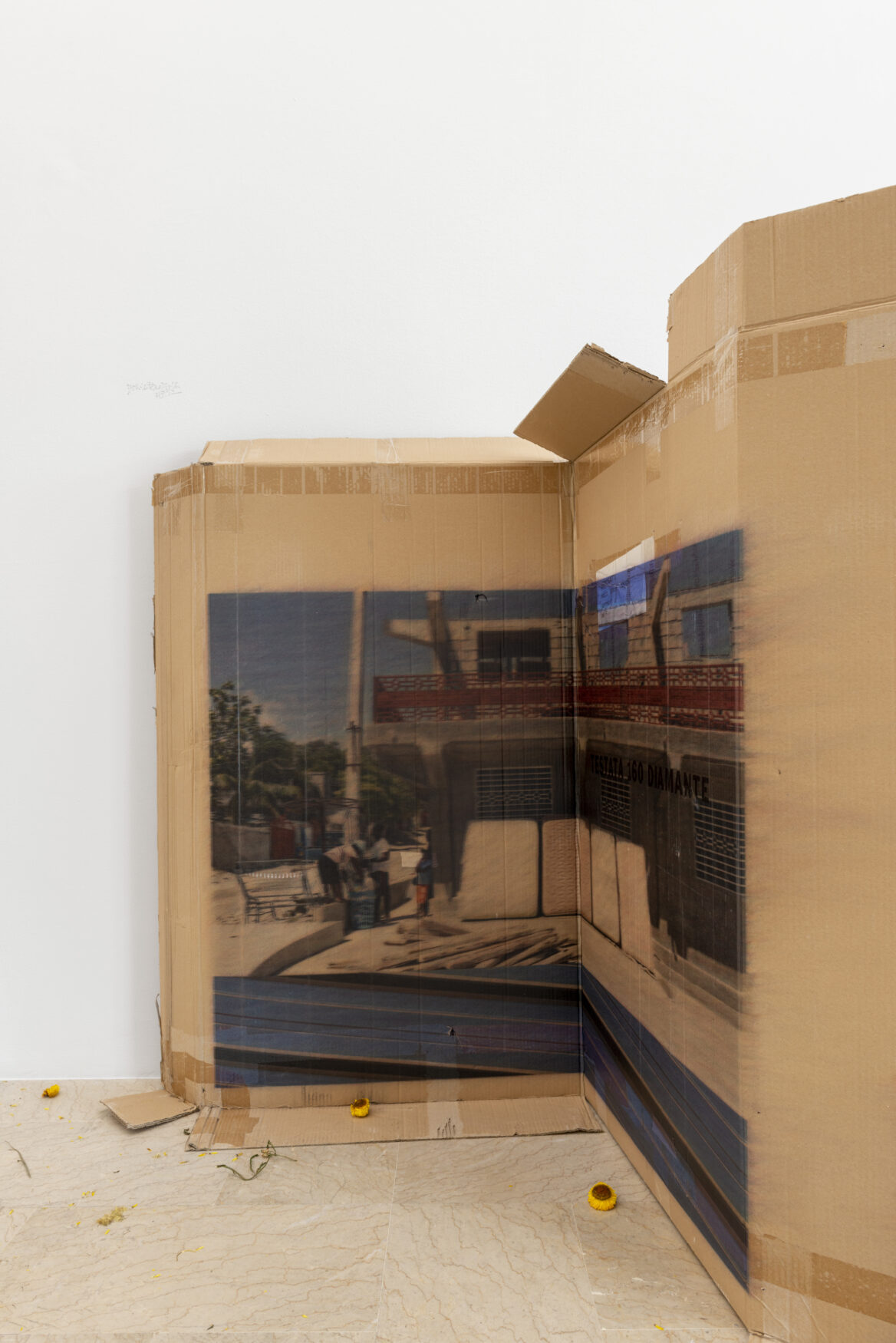
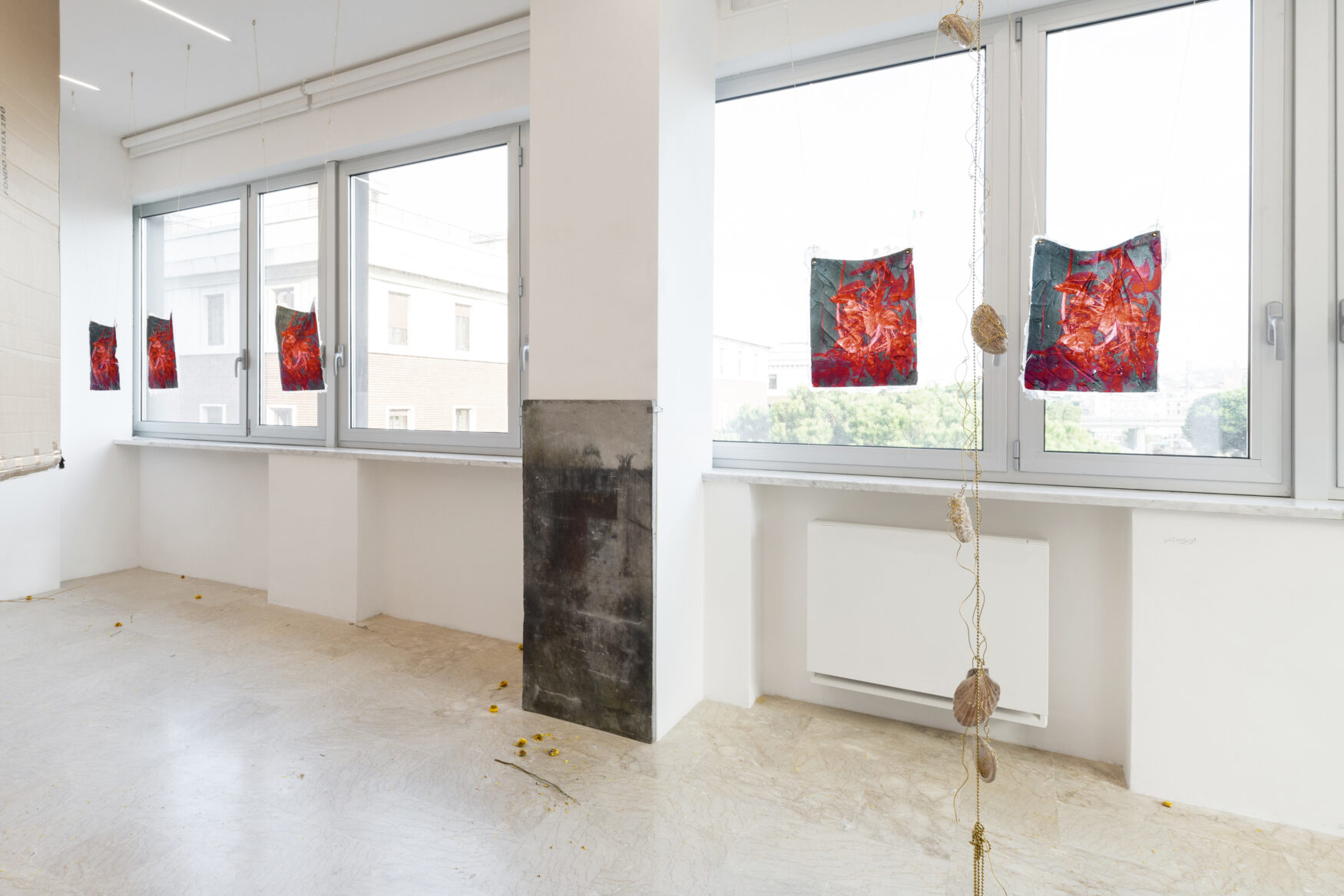
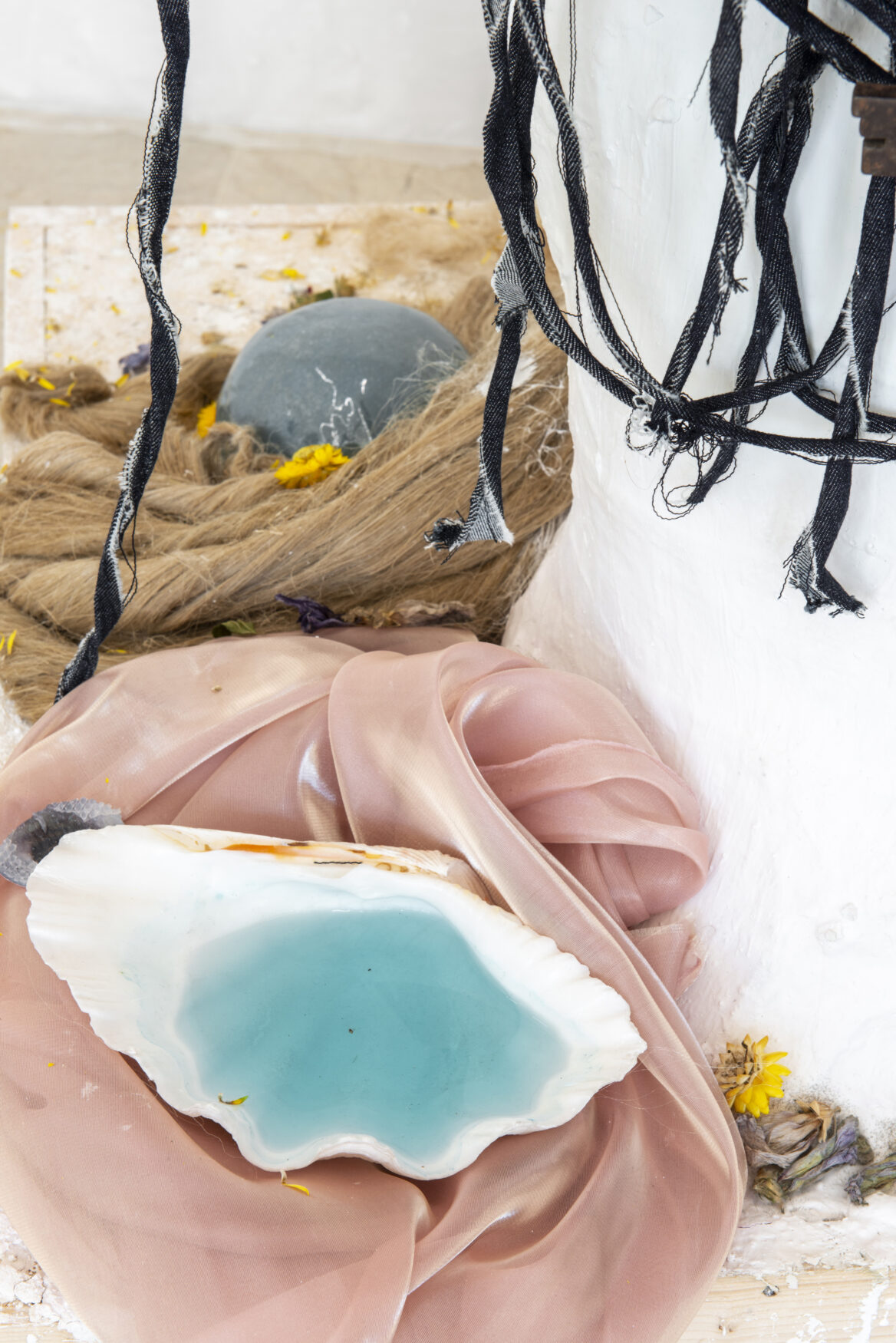
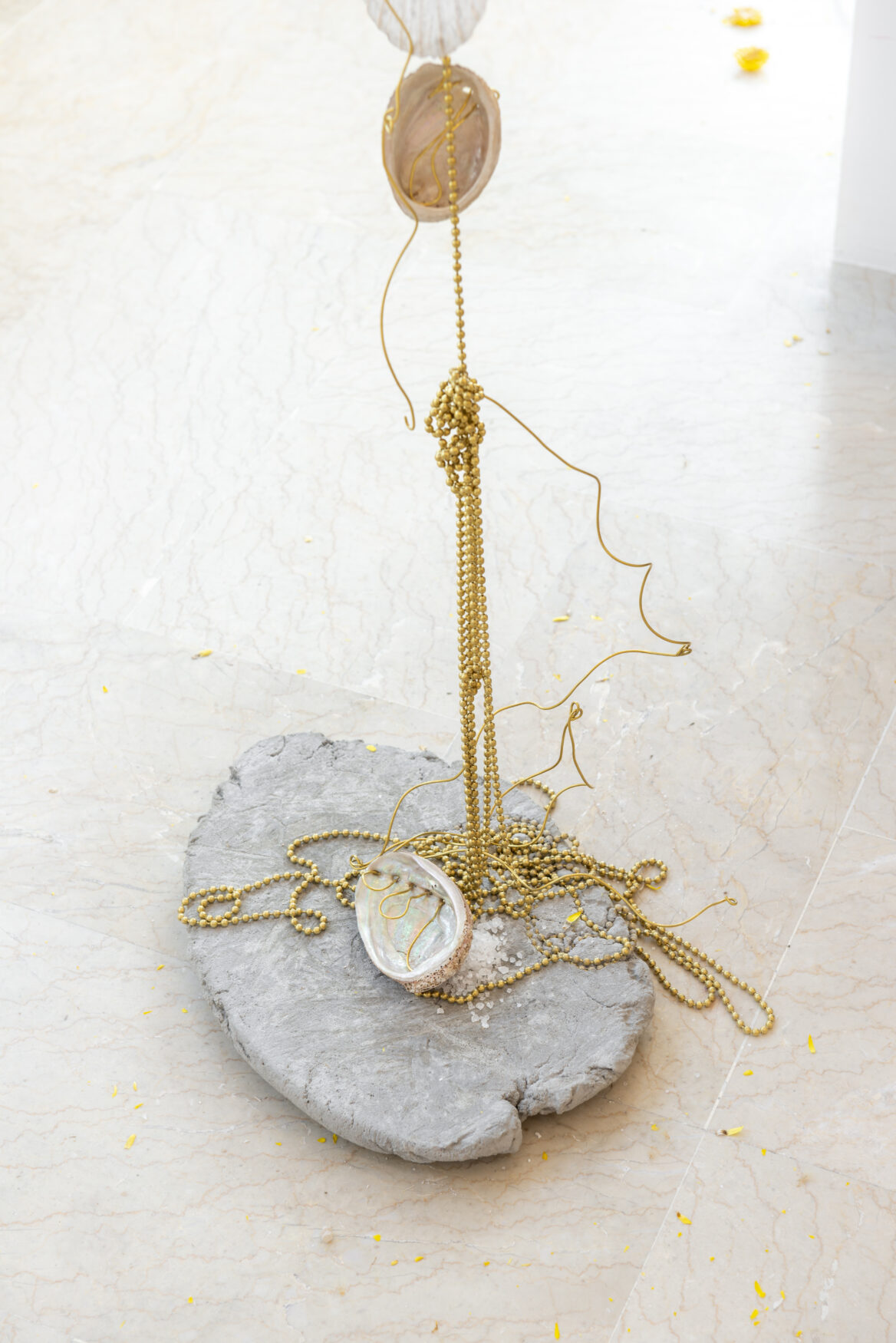
An inquisitive traveller, she builds, with objects found by chance, instruments useful for the creation of contexts poised between the wonder of the miracu- lous and the terror of the sublime; her work is interspersed with collections of rediscovered things, some of which have been preserved for many years, such as talismans, amulets, playing cards, or fetishes that take on curative functions. These collections also convey the artist’s interest in esotericism and spirituality. The exhibition, curated by Massimiliano Scuderi, is built from groups of new works, the result of a new creative experimentation, made with a total hetero- geneity of materials: from cement, to cardboard, to metals, to flowers such as the helicrisium, commonly called immortal flower in French-speaking countries. This metaphor urges us to understand the relationship between us and the soul of the world through an inexhaustible energy to which we all, in various ways, contribute. The path built inside the A SUD gallery constitutes an unrepeatable, spiritual, and multi-sensorial experience.